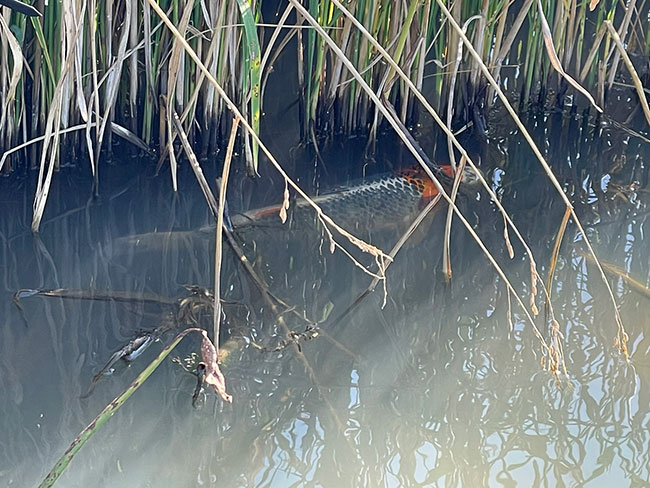
Growing fish in rice paddies goes back to South and Southwest China, over 20 centuries ago.
For most of that time, the fish was a side feature, mostly intended for the famer’s sustenance. But in the 1970s, with local and international markets opening, the farmers saw that selling fish could become a significant part of their business.
From the late ’90s to the early 2000s, China saw the area used for rice-fish co-culture expand by four percent (from 1.464 million hectares to 1.528 million) – by the end of that same period, the amount of food fish produced in paddy fields increased by 214 percent, from 649,996 tons to 849,055. Loach, tilapia, catfish, shrimp and carp have generally been the most common species used.
Rice paddies can be found in Arkansas, California, Louisiana, Mississippi, Missouri and Texas. And co-cultivation is not completely unheard of in the United States. Rice and crawfish have been successfully grown together in Louisiana.
A joint effort between the Dale Bumpers National Rice Research Center and the Harry K. Dupree Stuttgart National Aquaculture Research Center (HKDSNARC or SNARC), the experiments that were carried out examined the potential for growing koi fish in rice paddies. While further research is required, the initial findings were very encouraging.
“We selected koi because they are one of the best fish for this type of technology,” says the co-principal investigator of the research effort, Yulin Jia. “But other fish, such as tilapia and catfish, would work for these systems.”
Bartholomew Green, the other co-principal investigator, notes that the key focus was on stocking fish in paddies under cultivation to evaluate what impacts on fertilizer, herbicide, and pesticide use would result and how they would affect rice productivity, in the context of potential diversification strategies for U.S. rice farmers. As such, the warmwater fish culture component had to integrate into existing rice growing as seamlessly as possible.
“Consequently, typical aquaculture practices like daily feeding, mechanical aeration and water exchange were deemed impractical,” explains Green. “Benthopelagic food habits, hardiness, tolerance of shallow water depths, variable and high-water temperatures, and low dissolved oxygen concentrations, availability of fingerlings of the desired size, and reaching a marketable size with good market value within the 120 to 150-day rice growing period were factors that guided warm water fish selection.”
One of the biggest benefits of this technique is the relatively low infrastructure requirement beyond having a functional rice paddy. The one infrastructure issue they faced was predation. Jia says that a bird – a white egret, he suspects – frequented their experiments trying to make a meal of the koi. Failed deterrent efforts included a scarecrow, noise-making flags and even a noise cannon, but a toy coyote finally got the job done.
Another reason koi were selected for the initial trials was they are generally able to be sustained on the grass in the paddies. Some other fish species would likely require additional feed to prevent them from eating the rice itself – the koi will also eat the rice if there’s no grass available.
Green adds that koi, and the ornamental market, also presented the greatest potential for success in the context of rice farming as currently practiced in the United States.
The research showed benefits for both the farmer’s operation and the rice itself. With fish in the system, fish waste will feed the rice as a fertilizer, reducing input costs for the farmer. That fertilizer will likely result in a higher yield, higher protein content and higher milling quality.
“If the rice is broken, you sell it as flour at 50 percent of intact rice, so milling quality is super important for farmers,” says Jia. “So there’s a lot of added benefit, not only the income from fish but also helping rice to have better yield and better quality.”
One question that comes to mind to anyone familiar with how specific conditions have to be for aquaculture operations is how the suitability window for rice paddies compares to that of fish.
Green says that koi are very well-suited to those conditions. The water temperature in flooded paddies stayed within acceptable ranges for koi carp, but other fish species may not fit the anticipated temperature fluctuations of the paddy water so perfectly.
“More importantly, paddy water dissolved oxygen concentration preferably should exceed a minimum of 2.0 mg/L and definitely exceed 1.0 mg/L to ensure fish survival and good growth,” says Green. “Again, dissolved oxygen requirements of other candidate fish must be considered because mechanical aeration and water exchange as dissolved oxygen management strategies are not practical.”
Jia says the next step in their research is to analyze the toxicity of fish grown in these systems to ensure they are safe for consumption. No pesticides were used in their efforts, but some herbicides were used before rice seedlings emerged. Obviously, this is not a concern with ornamental fish, but something that will have to be examined before growing fish for food in the system.
Other future trials include testing different varieties of fish and rice, different stocking rates, and examining the emissions of greenhouse gases and heavy metals.
“If our preliminary results are validated [economically through on-farm trials] then rice-fish co-culture would be a diversification strategy available to rice farmers in the United States,” says Green.
There is no information, however, showing that this effort is worth pursuing in the other direction – while this could be a valuable diversification strategy for rice farmers, aquaculture practitioners should not be thinking about putting in a rice paddy.
“I don’t really see the fish farmer adding rice plants because it’s more difficult to grow rice than fish,” notes Jia.