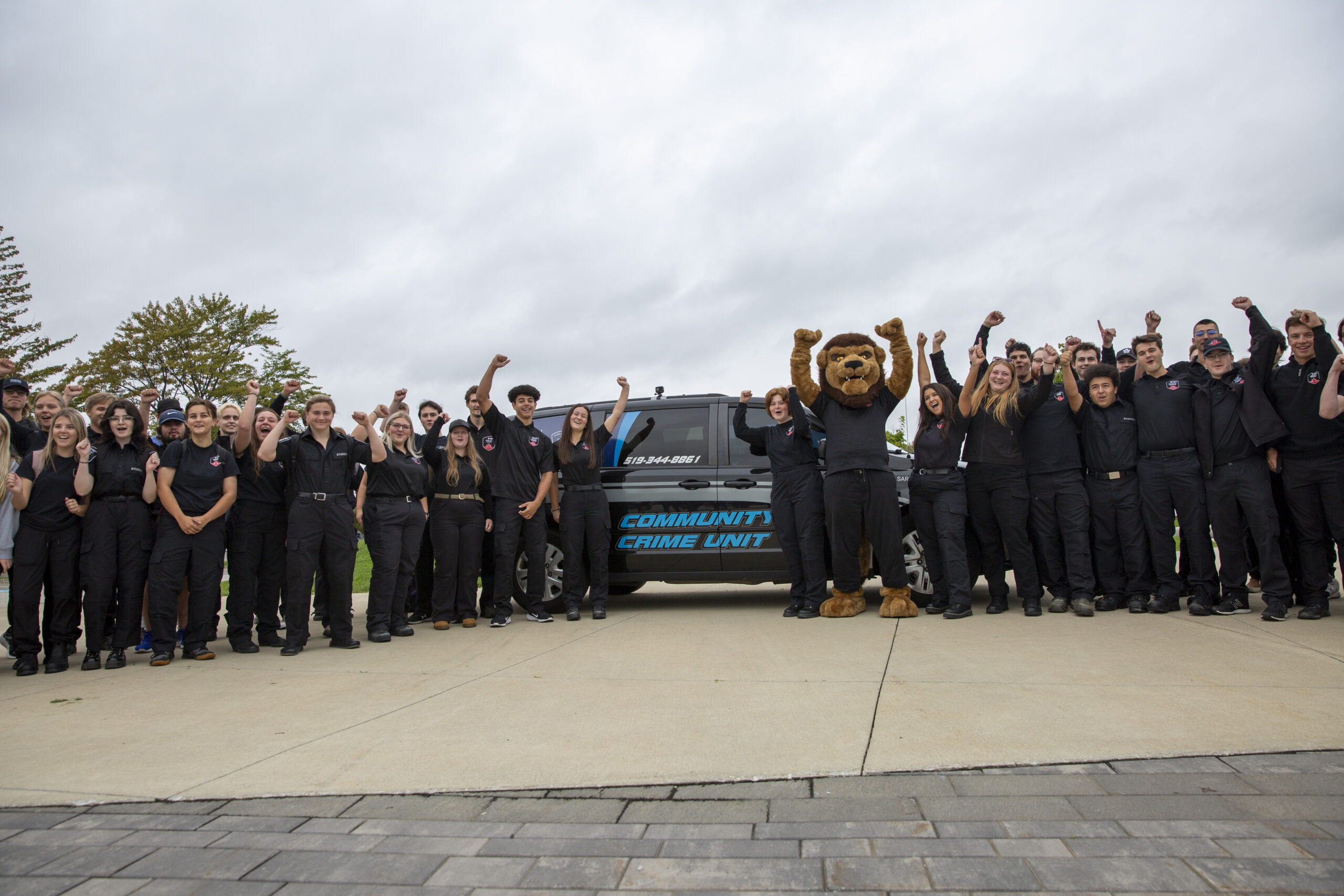
When Derek Davis was sworn in as chief of police in Sarnia in May 2022, one of his first major tasks was to develop a new business plan for the service, as their existing plan was set to expire in that same year. Part of this planning process involved hosting public town halls and distributing a community survey so that the new chief could better understand the community’s needs.
Although the survey covered many areas, one stood out. It showed that over 52 per cent of respondents said they had either been the victim of, or witnessed, a crime that went unreported. When asked why it wasn’t reported to police, 13 per cent thought the police were too busy, 17 per cent felt the crime wasn’t serious enough, 20 per cent believed reporting would take too long, and 41 per cent believed nothing would result from it. This underscored a community “crisis of confidence” in the SPS response to less serious offences.
From a practical community policing perspective, Davis recognized that many agencies seek workload efficiencies by not responding to “low priority” or “minor” offences. With limited resources, high call volume and a steady stream of higher priority calls for service, this approach made sense to SPS from a cost perspective. However, Davis also recognized that “If you’re a victim of a so-called minor crime, including theft or property damage, and call the police to report it, you want someone to do something about it.” The challenge facing the new chief and his leadership team was to provide better service to these victims of crime, using existing resources, and not increasing the already high workloads of front-line officers.
The Community Crime Unit
Informed by these new community expectations, Davis and the leadership team at Sarnia Police Service (SPS) developed their 2023 budget, knowing they needed to address this issue. Around the same time, Davis met with the executive team at Lambton College, a local post-secondary institution, and an idea was sparked. “What if we could collaborate on a new type of partnership? The College’s policing students are looking to gain a unique educational experience through SPS, and SPS wants to improve service delivery to our community. Together, we might find a win-win opportunity,” said Davis.
After extensive discussions, the concept for a Community Crime Unit (CCU) was finalized. Leveraging SPS’s web development expertise, a suite of student-oriented online tools was developed, enabling students to investigate crimes under the supervision of a sworn SPS member. These tools help CCU members investigate crimes that SPS members find more difficult to address among the larger surge of higher-priority emergencies.
Students interested in joining the unit must undergo an interview process and a background check for proper vetting beforehand. Once selected, they are required to sign an oath of secrecy and are treated like all volunteers in the police service.
“It’s their job to provide enhanced services to the members of the community who have been victimized by these lower-level crimes,” said Davis. “We wanted the students to be out in the community and interacting with the public. We wanted them to learn what information was important to gather in statements and the different pieces of evidence that police would need to collect in these cases. Essentially, we wanted them to be a part of the full process up until the point of contacting and interacting with the suspects.”
Once the students thoroughly investigate each case, their next step is to submit it to their supervising officer, who will then review their work and provide feedback. If the student has built a strong, successful case, it will then be passed to a police officer for further investigation or to make an arrest.
When the CCU was selecting its inaugural members, four students from the college were chosen. The unit was provided with office space, materials to establish a small investigation lab, and a dedicated vehicle to respond to victims in the community. The four students were divided into two groups, with each group working with SPS two days a week. Cases were assigned to individual students, which allowed a shift from the regular co-op model of experiential observation to active participation in policing functions.
“It’s important to note that this unit does not replace police officers. Instead, it frees up front-line officers for the higher priorities while addressing the types of calls that those same officers would have a difficult time getting to,” said Davis.
When considering the goals of the unit, a hope was for members to think about the social factors behind these crimes, such as mental health and addiction. Many of the offenders involved in “minor crimes” often have extensive histories of recidivism. Each interaction with police, especially in minor crimes, is a potential opportunity to connect willing offenders with necessary supports and resources. “It’s not just about blindly arresting someone and charging them, but looking holistically at holding the offender accountable, supporting victims and also exploring what might be the best way forward to prevent this individual from offending again. Each interaction is an opportunity to provide that off-ramp from criminality, if the person is willing,” said Davis.
Progress since 2023
In June 2024, Brad Murray, manager of crime and intelligence, assumed the role of supervisor of the CCU. He was initially attracted to the CCU as an innovative initiative providing a vital service to victims of crime.
“The CCU was already a well-oiled machine before I joined as the manager, but one of my goals was to broaden their perspective to acknowledge and focus on the connection between retail crime, the local criminal networks and organized crime globally,” said Murray.
Under Murray’s leadership, the CCU takes initial reports and provides personalized responses to “less serious” crimes, such as shoplifting, thefts from vehicles, mischief, and stolen bikes.
In one investigation, the CCU received several online shoplifting reports from a local retailer. Using images submitted by the retailer, CCU members identified the suspects, who were already known to SPS officers for other property crimes and drug offences. Sarnia Police’s Criminal Investigations Division took over the case, obtained search warrants, seized a loaded Glock 23 .40 calibre handgun, $15,120 in cash, 4 grams of fentanyl, 23 grams of methamphetamine, 4 grams of cocaine, and arrested three individuals.
In another case, the CCU received an online report from a resident whose golf clubs were stolen from his vehicle. With the CCU’s assistance, police were able to identify and locate the person responsible for the theft and determine where the property was being sold and/or traded. The initial investigation identified several individuals involved in theft and trafficking stolen property within the City of Sarnia. As a result, SPS launched Project Bobcat, which focused on property crimes in Sarnia and was led by the SPS Intelligence Unit. It has now resulted in charges against eight individuals.
Owing to the unit’s successes, SPS has increased the number of students from four to eight. “In policing, specifically intelligence-led policing, ‘work makes work,’ so it is important for the CCU to grow with the demands and current crime trends. It’s imperative that we plan for continued growth while maintaining our focus on the impacts of crime on our local residents,” said Murray.
Over the two years since its launch, the CCU has exceeded expectations in several key areas. The unit has been successful in handling lower-level cases, leading to a high number of clearances, charges and arrests for crimes affecting everyday citizens. Considering the numbers, the CCU has investigated 1386 occurrences that have resulted in 412 arrests and 831 criminal charges.
Sarnia Police continues to receive positive feedback from students involved in the CCU program. More importantly, the community response has been positive, especially for victims of crimes who see their cases resolved and property recovered. Benefits are also clear in recruitment, as CCU students are applying for both sworn and civilian positions. Alternatively, they may find other policing roles, such as dispatch or other critical non-enforcement roles that are of interest to them.
Students have been overwhelmingly positive about their experiences and the hands-on learning the unit provides.
Liam Chicoine, one of the CCU’s first student members, is now finishing his training at the Ontario Police College. “Working with the CCU solidified my determination to become a constable with SPS. The CCU role helped me develop a realistic understanding of the job of a police officer and see how they can make a difference,” he shared. “Learning how to make a difference in my community was incredibly valuable.”
The future of the CCU
An important aspect of the program to Davis is that it shows the Service’s ongoing commitment to finding effective and financially sustainable ways to provide policing services to their community. “This isn’t something that we purchased; it was an idea to address an operational need, to avoid negatively impacting already stretched resources, and to leverage existing partnerships in new and innovative ways,” he shared.
Sarnia Police are satisfied with their partnership with Lambton College and the results of the CCU program. As the program progresses, Davis and Murray aim to continually improve and structure it further. This evolution includes a quicker onboarding process as they welcome new students each semester.