For an industry as often vilified for its allegedly oversized carbon footprint as plastic packaging, making incremental environmental improvements to regain public trust has long ceased to be a viable strategy for reversing the unfolding trend of growing anti-plastic resentment and outright hostility.
And while developing new game-changing solutions and innovations to restore the industry’s reputation may be a tall order, Canadian food-packaging manufacturer Lucid Corp offers a compelling example of how true packaging innovation and ingenuity can help plastic manufacturers of all sorts to change the existing unflattering narrative.
Founded in 2020, the privately owned Lucid may not be a household name just yet, but that could all change next year, when the company’s proprietary Lucid Infinity brand plastic trays start appearing on the shelves of fresh meat aisles at major grocery stores across North America.
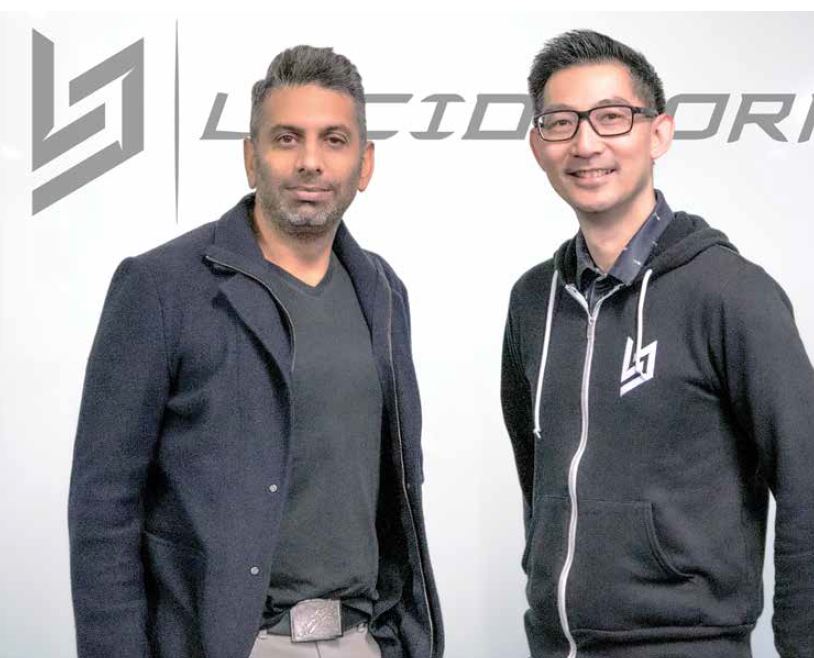
A brainchild of the company’s co-owners Salman Ebrahim and Edmund Chin, the Lucid Infinity trays leverage the recyclability of 100 per cent PET (polyethylene terephthalate) plastic and high-quality thermoforming to create a one-of-a-kind, two-piece tray design that completely eliminates the need for the ubiquitous moisture-absorbing pads placed underneath the case-ready fresh meat, poultry and seafood product retailing in traditional plastic and foam trays.
Colloquially called meat diapers in North America, these pads attempt to absorb and soak up the juices released by packaged fresh meat, but by being completely unrecyclable, they have also become a significant contributor to landfill waste, with an estimated 50 billion-plus meat diapers ending up in landfills each year.
Moreover, their off-putting appearance and texture also prompts many consumers to throw away the tray containing the meat diaper straight into their household garbage immediately after emptying the meat inside, even if the tray itself may in fact be recyclable.
As Lucid’s Corp’s managing director Edmund Chin explains, none of this throwaway wastefulness ensues when the fresh protein is packed inside the Lucid Infinity trays, thanks to their unique leak-resistant design and two-piece construction that has already been patented.
Comprised of an outer rectangular shell and a snug-fitting die-cut insert placed slightly above the tray’s bottom, the Lucid Infinity tray basically creates a reservoir in the space between the insert and the tray’s bottom to trap all the purge underneath the meat—leaving consumers with the simple task of rinsing the tray and placing it directly into the Blue Box for recycling.
“In terms of recyclability, it really is as easy as recycling paper boxes, says Chin, citing the Lucid Infinity tray’s all-clear transparency and 100 per cent PET content as other important sustainability enhancements.
“Because PET is essentially infinitely recyclable, we believe that the Lucid Infinity tray may be the start of something that is going to fundamentally change the case-ready meat-industry segment,” Chin told Canadian Packaging during a recent visit to the company ’s state-of-the-art, 160,000-square-foot manufacturing facility in Brampton, Ont., which is gearing up for commercial-scale production of Lucid Infinity meat trays early in the new year.
According to Chin, the Lucid Infinity trays’ clarity and transparency help communicate their inherent recyclability to consumers in the same way that plastic water bottles do, while also adding value to the recovered PET collected at municipal recycling facilities.
“There are absolutely no contaminants in this package that could potentially contaminate the recycling stream.
“No labels, no caps, no adhesives… nothing to add any stress to the recycling process,” Chin points out.
“As such, we are actually adding value to the recyclers’ business,” Chin says, “and thereby helping create the Circular Economy model for plastics because it is just so easy to recycle.
“Just rinse and recycle!”
By removing the ‘Yuck’ factor associated with meat diaper removal and disposal, the Lucid Infinity trays also provide a better overall consumer experience, Chin contends.
“By using these trays, you’re not asking consumers to do something they are not readily willing to do: actually touching these ‘dirty diapers’ to remove them from inside the tray,” Chin states.
In terms shelf-life and product appearance, the Lucid Infinity trays have proven to match the performance attributes of trays with soaker pads, says Chin, adding the company has performed extensive testing to validate their efficacy, while continuously improving the tray’s design to address any shortcomings unveiled in those tests.
“The current version of the Infinity tray has gone through over a dozen reiterations,” Chin says.
“We really wanted to make sure that we would hit the market with the best-grade tray possible,” he says, citing two years of extensive R&D (research-and-development) efforts dedicated to perfecting the tray’s functionality.
As Chin points out, using the Lucid Infinity trays does not require any major equipment modifications by the endusers, nor do they require any special stretch or overwrap film for sealing the product.
While Chin acknowledges that the Lucid Infinity trays will be slightly more expensive than the existing conventional trays utilizing soaker pads, he doesn’t see the price differential—about 10 per cent per tray—as being a major roadblock to their widespread acceptance in light of all the extra value-added attributes they bring to the table.
“They are a little more expensive because we are essentially making two trays (shell and insert) instead of one,” he explains, “but we believe that most brand-owners will look beyond that extra premium when they see all the other advantages they offer.
In addition to no longer having to purchase soaker pads—while also eliminating the need for specialty pad insertion equipment or absorbing the labour costs of inserting them manually—the Lucid Infinity trays also offer brand owners a more effective merchandising vehicle for selling their meat products.
“We believe that brand owners are going to get a significant payback in several different ways,” Chin says.
“For one thing, they will be able to show consumers that they care about the environment by providing them with recycling-ready trays that will not end up in landfills,” Chin states.
“Secondly, they will provide a better consumer experience because consumers will no longer have to deal with those nasty-looking ‘dirty diaper’ pads.
“In addition, the product itself will merchandise better because the proteins and the purge are already fully separated from each other,” he continues, “allowing the product itself to be the star of the show.
“And finally, adopting these tray will enable them to contribute to bringing recycling streams back to North America, leading to real recycling renaissance by collecting these trays, and thereby effectively closing the loop at the end-of-life stage.”
Chin says the company is on schedule to be able to produce about 250 million Lucid Infinity trays by the end of the first quarter of 2025.
With another new 200,000-square-foot facility expected to come online next year, Lucid expects to have the capacity to produce over one billion Lucid Infinity trays annually by the end of next year.
To sustain this high-volume production capacity, Lucid has made extensive capital investments in robotics and other automation technologies over the last two years to turn itself into a highly efficient, vertically integrated manufacturer of high-quality, thermoformed rigid plastic trays, as well as 100 per cent PET clamshell packaging for customers in the baked goods and fresh produce industries.
“We have made significant investments in AI (artificial intelligence), robots and automation because we realize that we need to rely on technology to grow our business and be cost-competitive in the marketplace,” Chin explains.
Lucid Corp currently houses three extrusion lines, 30 thermoformers and numerous CNC machines for making the moulds for all the different tray shapes and sizes, along with highly automated warehousing and distribution to support its customers.
Already operating on a 24/7 production schedule on a year-round basis, the Brampton plant is operated by exceptionally knowledgeable and high-skilled staff comprised of dedicated automation, tooling, design, R&D, maintenance and production teams to keep running like clockwork, Chin relates.
Having these extensive capabilities in-house enables Lucid Corp to provide its customers with high levels of customization to meet the clients’ diverse application needs, according to Chin.
“We can easily customize any sort of tray size our customers may require,” Chin states.
“Although our Lucid Infinity product family will ultimately comprise 10-to-12 core SKUs (stock-keeping units) to fit most meat-packing applications, if a customer wants a deeper or a shallower tray, for example, we can easily accommodate that.”
In addition to selling its packaging products across North America, Lucid also ships PET packaging to the European, Australian and Caribbean markets, according to Chin, who expects those markets to expand significantly after the launch of the Lucid Infinity protein trays.
“We have spoken to practically all of the largest beef and chicken processors across North America,” he relates, “and the feedback has been very positive, just tremendous.
“Our service does not stop with just shipping the trays to our customers: we will actually go to our customers’ facilities to help them optimize their packaging process on their existing equipment,” Chin points out.
“We have very strong design and engineering teams that will tweak whatever needs to be tweaked to deliver a drop-in replacement solution to replace the conventional process relying on soaker pads.
“We interact with our customers on a daily or weekly basis, whereby we take their ideas and vision and work with them to bring it to life,” he continues.
“Most of our customers are engaged in constant dialogue with our design team, engineering team and our other partners to ensure that we provide them with the best possible solution.
“Typically, we can take our customers’ concept and provide them with a working prototype and related tooling in less than a week,” Chin states.
“There have been many other companies trying to address the soaker-pad issue for years,” Chin notes, “but none of them have been able to develop a practical and sustainable one-piece solution.
“That’s why our two-piece tray will be a truly disruptive technology that will really change the way the way that fresh protein is packaged,” he proclaims.
“Not only is it practical, but it is also cost-effective and, above all, highly sustainable.”
Adds Lucid Corp president Salman Ebrahim: “In five years, I see Lucid Corp develop into a multinational company with factories in North America and Europe, and perhaps at a few other locations around the globe.
“We already have four patents for the Infinity tray’s utility and design in about 40 different countries,” Ebrahim states, “so we feel that it’s not just a North American solution, but a global solution.
“As a company that is obsessed with sustainability, we are proud to show real leadership not just in terms of advocacy, but by offering real practical solutions for developing a more sustainable circular economy as it relates to PET packaging,” Ebrahim asserts.
As Chin concludes, “I don’t think that the plastic industry has done a great job of changing the current negative narrative in terms of highlighting all the benefits of recycling and lower carbon footprint that PET packaging can contribute, along with other solutions, in helping the world to resolve the climate-change crisis.
“But we strongly believe that our innovative solution will help the industry overcome all the greenwashing dominating the current narrative by educating consumers what real packaging sustainability is all about.”