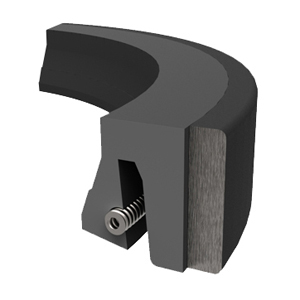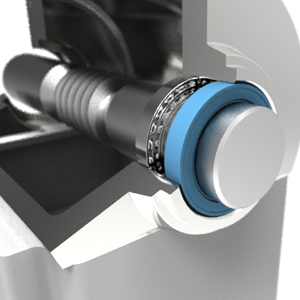
Daemar’s extensive line up of shaft seal products has been developed to provide exceptional value by combining the quality and performance that design engineers require with the total cost of ownership savings that today’s businesses demand. Let Daemar’s technical team assist in selecting the correct seal for your application.
The Right Seal Solution for Your Application
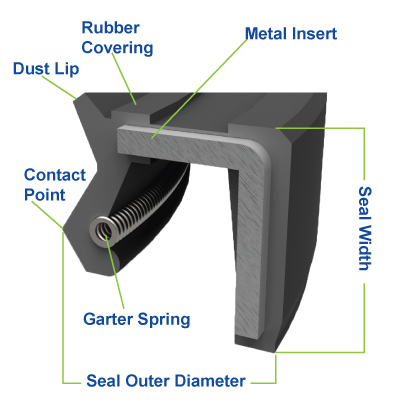
DMR radial shaft seals feature single, double and multiple lips that are engineered to help retain lubricants and exclude contaminants. If temperature or chemical exposure is a concern seals are offered in a range of compounds to best suit the operating environment including: fluorocarbon, silicone and nitrile. If you require a flexible seal in solid or split configurations our Clipper seals with a non-metallic composite heel and elastomeric sealing lip are available. Our seals range in O.D. sizes from below 1” to over 40” which helps ensure that we can supply the size and style your application requires.
Design Equipment to Promote Better Seal Performance
For a seal to optimally operate requires the appropriate design of the two components that the seal interacts with - the Bore and the Shaft. The Bore should have an adequate lead in chamfer and proper tolerancing to allow a proper press fit of the seals outer casing when installed, this will prevent leakage between the seal and bore and eliminate any rotating or movement of the seal during operation. Manufacturing the shaft with proper lead in chamfer, appropriate diameter and surface finish will increase seal performance and extend the operating life of the seal. Minimizing shaft movement (run-out) and misalignment will increase sealing performance and limit seal lip wear.
Extending Seal Life Starts with Proper Selection
Although not often the most expensive component in a bearing assembly the proper selection of the radial shaft seal can be crucial to ensuring the longevity and reducing system maintenance costs of gear boxes, pumps, motors and other power transmission devices. Rotary shaft seals have two primary functions; the first is to retain system lubricants therefore allowing for the proper operation with optimal levels of lubrication. The seal’s second primary function is to exclude contaminants from entering the system, if allowed to enter the contaminants will cause the bearings to eventually fail. Proper seal selection begins by understanding and assessing the demands of the operating environment of the particular application.
CASL |
Privacy | Accessibility|Unsubscribe If you visit any links, we will provide your subscription contact info (not your email) to the advertiser or sponsor.