|
 |

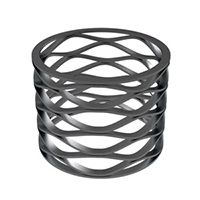
Daemar’s range of wave springs are an ideal solution for applications that require spring force but have only limited space. The wave springs allow design engineers to work with lower heights yet provide the same force as traditional coil springs. It not only provides for space savings but also smaller assemblies that use fewer materials, hence lower production costs.
|
| |
|
|
Cost Saving High-performance alternatives to Traditional Springs
Simplify your mechanical assemblies, decrease installation costs and decrease material waste by incorporating wave springs into your designs. Wave springs can self-locate in bored holes or on shafts. And a single multi-turn wave spring can frequently replace an entire stack of disc springs, eliminating an assembly step and saving cost. Moreover, they don’t suffer from the torsional loading and twisting that can make conventional coil springs less effective.
| |
|
|
| |
Formulas for Spiral Wound Wave Springs
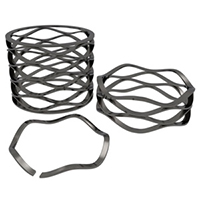
The first and most vital factor is the load the application will apply to the wave spring. The amount of axial force the spring must produce when installed at its work height is the required load. For an application, to select the right wave spring, several formulas are available (depending upon the type of wave spring used) that can be used to find Diameter Expansion, Deflection, Operating Stress and Fatigue Stress Ratio.
| |
|
|
| |
Preload Bearings, Reduce Endplay, and Minimize Vibrations
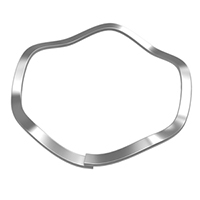
Applying a permanent thrust load to a bearing assembly is important for a secure and successful installation. The bearing preload process extends component lifetimes by reducing large thrust loads, eliminating unnecessary clearances and creating high stiffness. In addition, the wave springs help secure the bearings in place and reduce potentially damaging vibration.
| |
|
|
| |
|
| | |