Inside the philosophy and engineering culture of one of the country’s leading medical device manufacturers.
Canada’s medical technology sector is currently at a crossroads. From one perspective, the country boasts an impressive legacy of world-class research institutions and a vibrant pool of talent. Through another lens, though, the journey from innovation to commercial success remains riddled with unique systemic and operational barriers. As global healthcare demands continue to grow increasingly complex, Canadian MedTech companies face the critical challenge of scaling innovative medical devices while navigating a fragmented healthcare system, evolving regulatory frameworks and limited access to capital and talent.
One company that seems to have figured these complexities out is homegrown Canadian MedTech leader Sterling Industries. It operates locations in Kalamazoo, Michigan, Concord and Barrie, Ontario and is headquartered in Woodbridge, Ontario. And with over four decades of experience in precision manufacturing, the company has established itself as a trusted partner for OEMs and MedTech innovators across North America. Specializing in the production and assembly of complex components and finished devices, Sterling delivers scalable solutions for regulated industries including medical, life sciences and advanced industrial markets. From early-stage prototyping to full-scale production, the company offers vertically integrated services – from design for manufacturability and sourcing to machining, assembly, testing and logistics.
However, what sets the company apart is its commitment to collaboration and operational agility. The company doesn’t just manufacture components – it helps bring ideas to life through a strategic, customer-centric approach. Whether supporting a startup with rapid iterations or enabling a multinational OEM to scale production efficiently, Sterling adapts its capabilities to meet diverse needs without compromising on quality or speed. With in-house engineering, automated production lines and a data-driven quality management system, Sterling helps reduce time-to-market and mitigate risk for its clients.
As a result, Sterling serves as a beacon of sorts on the oft-clouded Canadian MedTech landscape, signalling a way forward for other Canadian MedTech companies attempting to find success and growth among the complexities of the industry. So, to better understand all the dynamics at play and explore how Canadian companies can unlock their full potential and accelerate their strategic and technical efforts in order to drive innovation, we spoke with Sterling Industries’ CEO, David Van Slingerland, about some of the broader challenges the sector must overcome.
Promise and pitfalls
Despite Canada’s strong foundation and storied history in medical innovation, which the MedTech CEO acknowledges, he suggests that one of the core issues impacting the industry is the way in which Canada’s publicly funded healthcare system is structured. Unlike in the United States, where healthcare is largely privatized, and cost-benefit analyses can support the adoption of new, higher-priced devices that reduce overall patient costs, Canada’s budget allocations are highly siloed. As a result, explains Van Slingerland, innovation can be stifled.
“We have incredible research talent across the country and a history of introducing breakthrough ideas,” he says. “But translating those ideas into market-ready products that actually improve patient care is a different story. In Canada, operating room budgets are separate from budgets for hospital stays or infection management. So, if a device is expensive in the operating room but leads to fewer infections or shorter hospitalizations, the operating room decision-makers may still reject it because they don’t control the savings downstream.”
This budget fragmentation, he explains, discourages the adoption of advanced technologies that could improve outcomes and reduce total healthcare costs. As a result, promising devices and innovations developed in Canada often gain traction in the U.S. private market before they even make headway at home. It’s an outcome that can be incredibly frustrating for Canadian companies, he says, but one that’s also an economic reality.
Reimbursement and regulation complexities
Van Slingerland goes on to explain that reimbursement and regulatory challenges also serve as bottlenecks that stall and impede medical device innovation in the country.
“Many innovations don’t have an existing billing code, so hospitals and providers have no clear way to pay for them,” he says. “Without reimbursement, commercialization stalls and both short- and long-term innovation suffers.”
He goes on to explain that most medical device companies rely heavily on reimbursement pathways to recoup investments. The lack of clear billing codes in Canada, he says, and the complexity of regulatory approval processes, contribute to extended timelines and heightened risks. What’s more, Canada’s capacity for clinical trials and diagnostic validation is limited, which, explains Van Slingerland, places even more strain on those operating within the industry.
“Rigorous clinical studies are necessary for regulatory approval,” he recognizes. “But they are expensive and require specialized infrastructure and expertise. That puts a lot of pressure on startups and smaller companies who are already facing an incredible number of challenges.”
He points to recent efforts to harmonize regulatory standards globally as a positive step. Canada’s adoption of the Medical Device Single Audit Program (MDSAP) and alignment with ISO standards help streamline market access internationally. However, developing an intimate understanding of and working within diverse frameworks, including the FDA’s evolving requirements in the U.S. and the European Union’s stricter Medical Device Regulation (MDR), remains a challenge.
The rise of integrated MedTech ecosystems
Despite these challenges, Van Slingerland stresses the fact that there are currently just as many opportunities for those operating within the MedTech industry. And, he says, much of the opportunity is being driven by advanced technologies and the wherewithal of companies to leverage their capabilities to the fullest.
While the development and use of traditional medical devices remains crucial, Sterling’s CEO believes that the future of MedTech lies in integrated, connected systems. Devices that seamlessly exchange data with electronic medical records (EMRs), like surgical devices which automatically upload clinical notes and images during procedures, are presenting massive potential. In fact, according to Van Slingerland, they offer transformative capabilities to improve clinical workflows and patient care.
“This kind of connectivity doesn’t just enhance device function – it transforms the entire care pathway,” he asserts. “Doctors used to dictate into tape recorders or do voice-to-text after their shifts. Now, with real-time voice integration, documentation is finished the moment the procedure ends. That’s a game-changer for productivity, enhancing accuracy and reducing errors.”
Home healthcare and combo devices
Van Slingerland also highlights the growing demand for home healthcare devices. Driven by Canada’s aging population and a desire to reduce hospital visits, it’s another area of innovation that the Canadian MedTech leader believes is rife with opportunity.
“There’s huge interest in ‘combo devices’ that merge drug delivery with medical devices, allowing patients to administer precise doses at home safely,” he explains. “Pharma companies are investing heavily in this space, and it’s a tremendous opportunity for MedTech innovation. By developing user-friendly, accurate devices for unsupervised home use, companies can tap into a growing market while improving patient independence and outcomes.”
Manufacturing as a strategic advantage
One of the ways in which Sterling Industries has set itself apart from most of its competitors within the industry, explains Van Slingerland, is its commitment to in-house manufacturing, serving as a critical part of the company’s strategy to ensure agility and quality control. Over the past five years, Sterling Industries has built injection molding facilities and acquired laser fabrication equipment, producing about 70 per cent of device components internally.
“Vertical integration shortens time to market and gives us greater control over materials and biocompatibility,” he says. “These outcomes are crucial for the development of invasive devices and allow us the greatest possible level of control over our processes and production.”
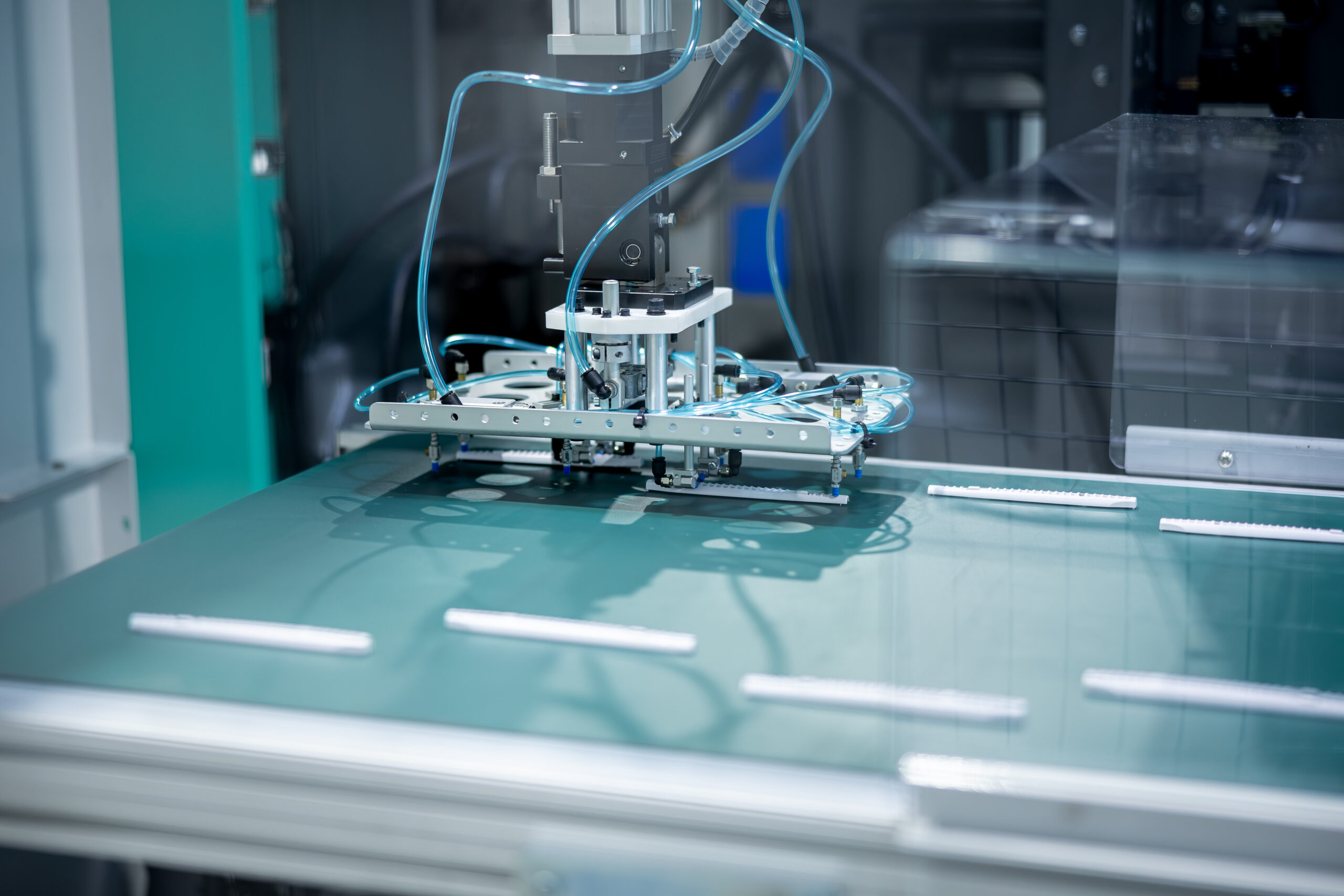
In addition, the company invests in clean rooms for sterile product manufacturing, further ensuring compliance with regulatory standards. And advances in 3D printing, especially using metal additives, have also allowed rapid prototyping and quick design iterations. Although not yet scalable for mass production, these capabilities enable Sterling to test and refine designs efficiently, helping to introduce cutting-edge innovations within shorter timeframes.
Accelerating innovation with advanced tools and collaboration
Another way by which Sterling Industries separates itself from other companies working within the Canadian MedTech industry is the culture of engineering that it’s built which influences the practices it employs, powering the company’s accelerated development cycles. Leading the way is Sterling Industries’ Senior Engineer and Team Lead, Project Manager, Sanjesh Yasotharan, who understands just how important his team’s work is and the critical nature of the devices and components that they design and manufacture.
“Medical device development is a significantly important, high-compliance environment,” he says. “We need to deliver innovative solutions rapidly but with zero compromise on safety and reliability. As a result, it’s our responsibility to not only ensure that our processes are maintained, but to also make sure that we’re considering everything at our disposal in order to enhance and improve our practices. For instance, we’ve been leveraging artificial intelligence to automate repetitive tasks such as documentation and data transfer. Our goal with this is to free engineers from administrative burdens so they can focus on creative problem-solving.”
Yasotharan points out that Sterling’s engineering teams also extensively use simulation tools like mold flow analysis, finite element analysis (FEA) and computational fluid dynamics (CFD) to validate designs early, minimizing costly late-stage changes.
“We want to get the design right the first time,” he stresses. “This upfront rigour reduces risks and shortens time-to-market.”
Design for manufacturability
Another hallmark of Sterling’s success is its commitment to design-for-manufacturability concerning every project it embarks on, considering it from the earliest stages possible. Yasotharan contrasts this approach with his earlier industry experiences where manufacturing was often an afterthought, which inevitably caused delays.
“Right from the start, we discuss how the part will be made, feasible tolerances, draft angles and parting lines,” he explains. “Because we produce everything ourselves, building it right the first time is critical. This early alignment between design and manufacturing not only helps avoid costly redesigns, but it also helps to build and maintain customer confidence in our delivery timelines and the quality of the product.”
Supporting early-stage startups through close collaboration
Yasotharan also highlights Sterling’s risk-based approach, collaboratively setting inspection criteria and process controls with clients to ensure smooth transitions from prototype to production. Early-stage startups often come with tight budgets and evolving product definitions, he explains. Sterling’s collaborative culture helps bridge these gaps.
“What’s challenging is extracting the ‘tribal knowledge’ clients hold about their own technology,” He notes. “To facilitate this, we visit their facilities, review prototypes and watch operators to understand nuances that may not be documented. This iterative, open process builds trust and allows us to tailor manufacturing solutions for small production runs, a growing need among many companies operating within the MedTech sector.”
Ensuring reliability – non-negotiable
It may very well be understood without mentioning, says Yasotharan, but reliability is paramount in devices used in surgical and diagnostic contexts. In fact, he points out that failure rates must be well below one per cent in order to be deemed accurate and functional within the MedTech industry. It’s a challenge that Sterling’s engineering team lead recognizes, stating that it’s the reason for their unwavering commitment to testing and verification, especially early on in the process.
“You can’t test tens of thousands of pieces before launch,” he says. “Simulation tools and risk analysis like failure modes and effects analysis help us predict and design out failure points early. It’s an approach that ensures that our products meet ISO standards and function flawlessly when patient safety is on the line. You need to think like the user and anticipate every possible misuse or failure. It requires a mindset shift for some in order to begin using risk management tools as ways to improve the product, not just to fulfill paperwork requirements.”
A vision for Canada’s MedTech future
The convergence of Sterling Industries’ leadership and culture of engineering has to this point resulted in nothing less than an example for other companies working within the Canadian MedTech industry to look to as a blueprint of sorts – one that seems to guide a path forward, promising the unlocking of potential.
As Van Slingerland points out, the industry in Canada possesses the ideas, talent and capabilities to be a global leader in the development and manufacturing of medical devices. However, in order to realize those capabilities, he suggests that enhanced strategic investment in manufacturing, the embracing of digital integration and the fostering of a collaborative ecosystem are all necessary.
“The opportunity is clear. With the right kind of investments, combined with the proper nurturing of resources, we can create an environment in Canada where innovative medical devices not only get developed but thrive commercially. And, in the end, the greatest benefit of this result is in better patient care and a strengthened Canadian MedTech industry.”