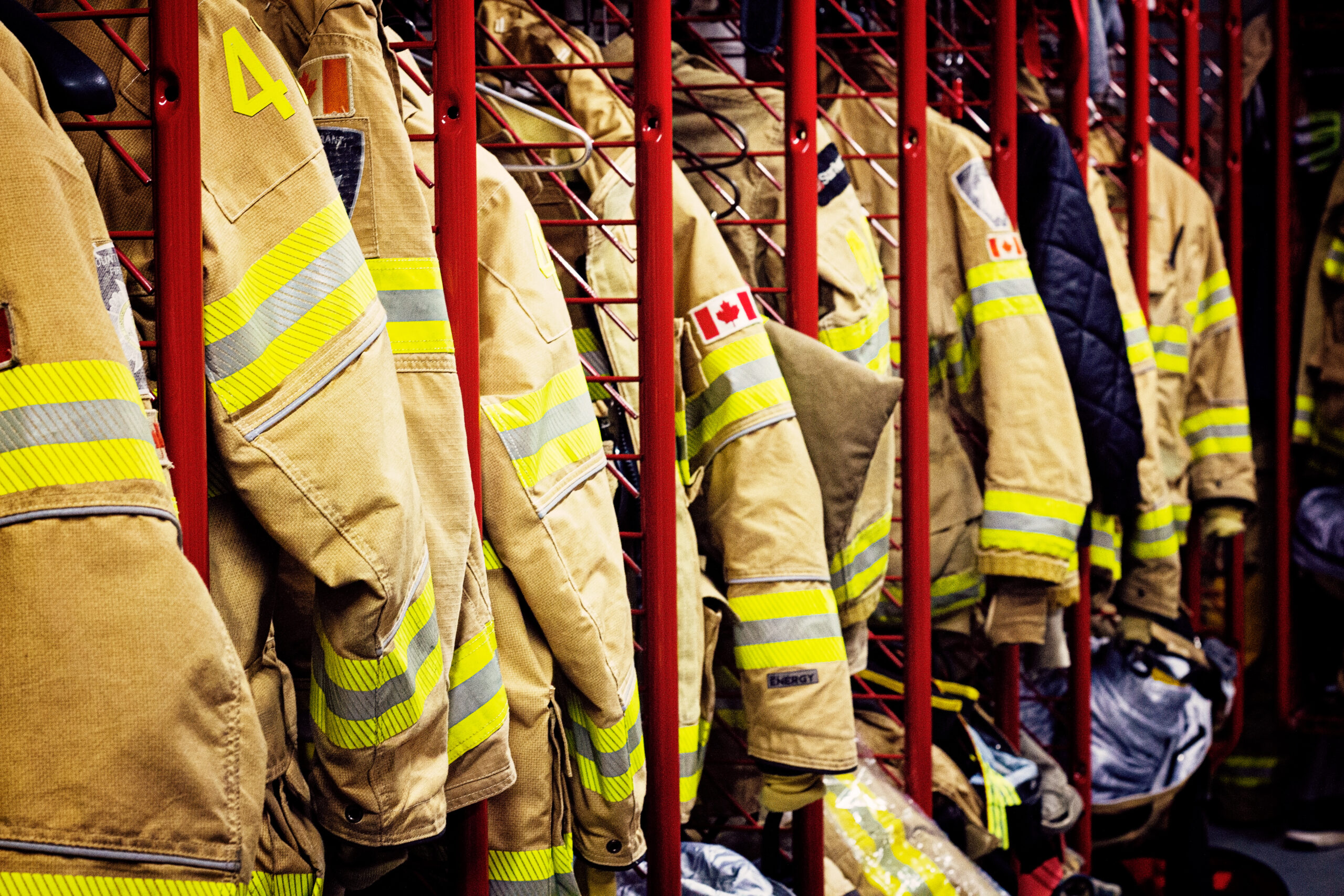
Statistics Canada is spearheading a new initiative as part of the Government of Canada’s National Framework on Cancers linked to Firefighting. In partnership with Heath Canada and the firefighting community, Statistics Canada is creating a Canadian firefighter cancer registry, a comprehensive database of Canada’s career and volunteer firefighters that is integrated with the Canadian Cancer Registry. This project is a crucial step in addressing the high rates of cancer linked to fire fighting.
Project overview and funding
The Canadian firefighter cancer registry project has received funding of $3.47 million over four years, with an additional $0.2 million in ongoing funds. This financial support is a testament to the Government of Canada’s commitment to creating a national framework to study and understand cancers linked to fire fighting. The primary objective is to develop and maintain a registry that could include structural, wildland, airport and military firefighters. By collaborating with various stakeholders, Statistics Canada aims to create a registry that will facilitate large-scale studies on firefighter cancer, long-term health implications, and the effectiveness of interventions. The registry also seeks to have the capacity to disaggregate data to support detailed analysis of specific groups, such as women and Indigenous firefighters.
Statistics Canada’s role and capabilities
As Canada’s national statistical agency, Statistics Canada operates under the Statistics Act, which enables it to collect data through censuses, surveys, and administrative data sources while legally protecting the confidentiality of data. Statistics Canada’s mandate is to provide high-quality statistical information to Canadians. However, it’s important to note that Statistics Canada does not create policies and programs; instead, it provides data and data-driven insights in order to support evidence based decision making.
Statistics Canada has a wealth of data that can be integrated with the firefighter registry and used to support research on firefighter health. This includes data from various sources, such as:
- Census of population: Both the short-form census (covering 75 per cent of the population) and the long-form census (covering the remaining 25 per cent).
- Survey data: This includes self-report surveys such as the Canadian Community Health Survey (CCHS), as well as physical, biological, and crowdsourced surveys.
- Administrative data: This is a rich source of information, including vital statistics (births, stillbirths, and deaths), the Canadian Cancer Registry (CCR), hospital records, and income data from tax records. Data linkages, such as with the Canadian Census Health and Environment Cohort (CanCHEC), also provide integrated insights.
The Canadian Cancer Registry (CCR) as a model
The CCR serves as an excellent model for the firefighter registry. Established in 1992, the CCR is a partnership between the 13 Provincial and Territorial Cancer Registries (PTCRs) and the Centre for Population Health Data at Statistics Canada. The PTCRs collect and submit cancer case data, which Statistics Canada then cleans, analyzes, and disseminates. The objective of the CCR is to produce standardized and comparable cancer data that assists health planners, decision-makers, and researchers in identifying risk factors, planning and evaluating cancer programs, and conducting research.
The CCR’s value is enhanced by its ability to be linked with other datasets at Statistics Canada, such as census and tax data, which provides deeper insights into factors associated with cancer incidence and survival.
A powerful example of the CCR’s impact comes from a study showing that jurisdictions offering breast cancer screening to women aged 40 to 49 had higher 10-year net survival (84.8 per cent vs. 82.9 per cent) and more favourable stage distributions than those that did not. This research has contributed to the public discourse about access to breast cancer screening in Canada, providing insights to women and health care practitioners as well as enabling discussions on risks for breast cancer and the health outcomes associated with early screening. This research has also contributed to advancing the body of evidence that has informed policy makers’ recent decisions to revise breast cancer screening guidelines in the provinces of Alberta and Ontario.
These examples highlight the potential of a firefighter registry to produce impactful, data-driven insights.
Future collaboration and next steps
Statistics Canada is committed to advancing collaborative insights, including expanding on breast cancer research, applying the same data-driven approach to other cancers like prostate cancer, and creating the firefighter registry. The development of the firefighter registry will be a collaborative effort, aimed at building the data foundations to support informed decision-making for the fire fighting community.
To ensure the registry’s success, Statistics Canada is seeking to understand the key challenges and objectives of stakeholders. They are looking to identify the problems that the registry should address, such as data gaps in occupational cancers, tracking exposures, or improving prevention strategies. To move forward, it will be essential to define the pathways to success, including identifying key players, necessary insights, data gaps, and potential contributions from different groups. This includes considering other successful registry models from different sectors or jurisdictions and prioritizing elements to create a cohesive and effective data ecosystem.
Conclusion
Developing a Canadian firefighter cancer registry is a significant and necessary project. By leveraging Statistics Canada’s expertise, statistical infrastructure, and data assets, the registry will provide the critical information needed to conduct large-scale studies on the long-term health implications of firefighting and the effectiveness of interventions. This initiative, built on a foundation of collaboration and data-driven insights, has the potential to make a profound and lasting impact on the health and safety of Canada’s firefighters.
We are in the process of reaching out to stakeholders in the firefighter community. While most are already aware of our plans to initiate collaboration, we welcome you to contact Statistics Canada (statcan.cfcr-rccp.statcan@statcan.gc.ca) with any questions or to discuss further.
Erik Dorff is the chief of the Canadian Cancer Statistics Program at Statistics Canada. In this role he is a member of the executive for the Canadian Council of Cancer Registries, a delegate on the High Level Strategic Group of the North American Association of Central Cancer Registries and is the project manager in charge of delivering the firefighter cancer registry project. Contact him at Erik.Dorff@statcan.gc.ca.
Len Garis is a senior advisor at the Canadian Centre for Justice and Community Safety Statistics at Statistics Canada, Ret. Fire Chief for the city of Surrey, B.C., associate scientist emeritus with the B.C. Injury Research and Prevention Unit, research associate – Community Heath and Social Innovations Hub, University of the Fraser Valley. Contact him at Leonard.Garis@statcan.gc.ca or lwgaris@outlook.com.