By the time much of Ontario’s glass industry began discussing LEAN manufacturing, 24 Hour Thermal Glass was already practicing it quietly and instinctively, without a formal name for the process.
I know this because I once asked the company’s founder, Galo Narvaez, whether he followed a LEAN manufacturing philosophy. “What the fuck is that?” he replied. It was not a dismissal, but an honest answer that revealed more about the company’s culture than any management framework could.
Founded in 1986, 24 Hour Thermal Glass began as a focused operation supplying insulated glass units to window and door manufacturers across Ontario, with a primary emphasis on the residential market. Like many successful manufacturers of its era, the company grew through necessity rather than ambition, responding to demand, refining process, and earning trust over time.
Over the years, the company operated out of multiple facilities before settling into its current location. Today, that facility feels permanent by design. The name is on the building. The brand is embedded in the operation. It is not an outpost or a trial. It is home.
While others held financial interests at various points, Galo Narvaez has always remained the primary name and face behind the business. Within the Canadian glass industry, it is not uncommon to hear “Galo” referenced as readily as the company name when discussing insulated glass supply.
From the outset, what distinguished 24 Hour Thermal Glass was not scale, but discipline. Long before efficiency frameworks entered everyday industry language, the company had already built a culture around accountability, repeatability, and throughput.
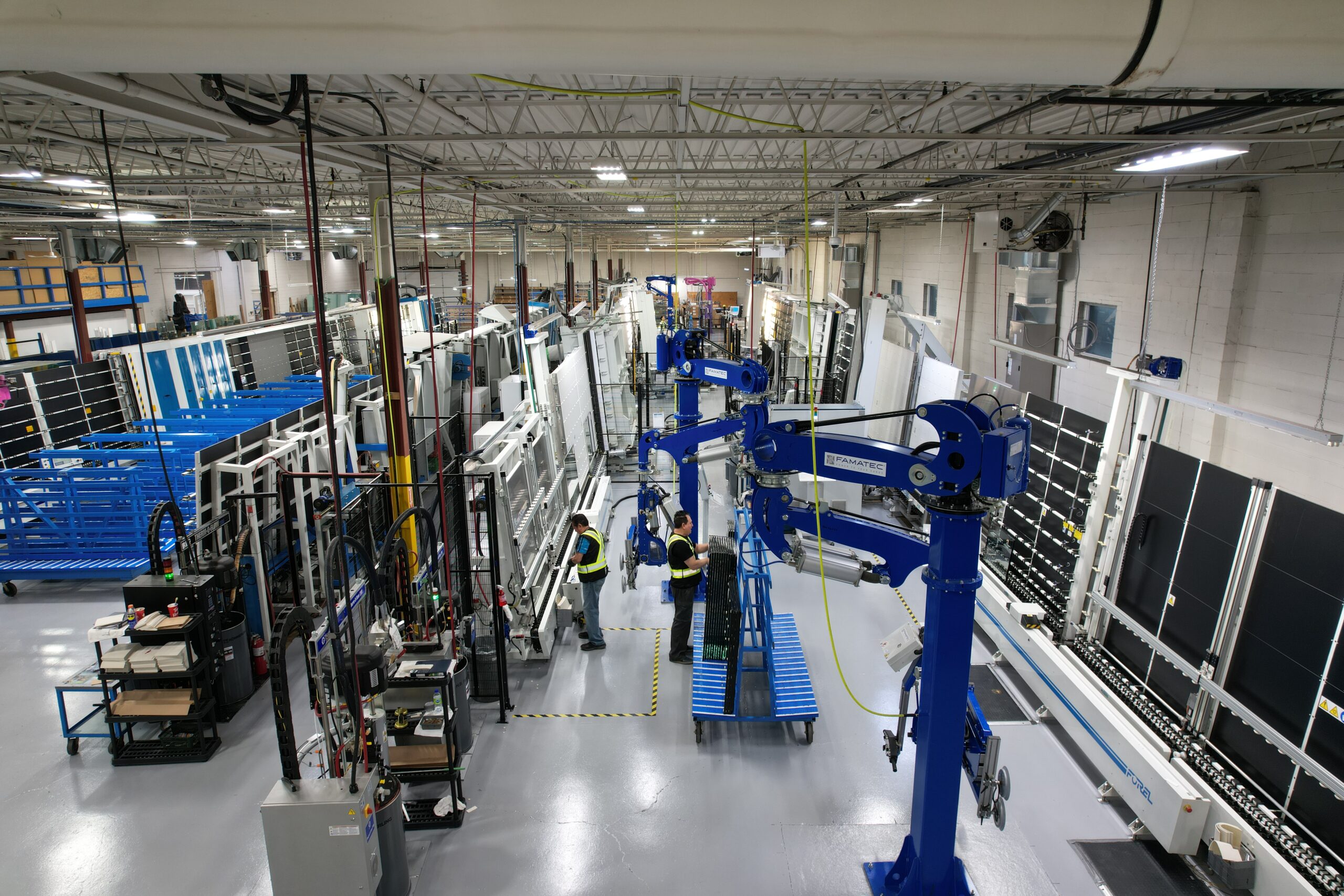
That discipline is visible on the shop floor. In-house quality control includes non-destructive, instantaneous measurement of gas-filled insulated glass units using plasma emission spectroscopy to verify fill rates. This step, still uncommon across much of theindustry, removes assumptions from the manufacturing process and enforces consistency at scale.
Beyond equipment, the discipline lives with the people. Skilled line employees understand the company’s expectations and executeto them daily. Quality is not inspected into the product; it is carried through the floor.
Christina Narvaez has been part of the business since she was old enough to work. For many years, she was a constant presence in the office, coordinating schedules, deliveries, and the realities that connect sales commitments to production timelines.
Today, as vice-president, her role centers on operational continuity. She ensures orders move efficiently from intake to production to dispatch, while also guiding how the company presents itself to customers and partners.
Under Christina’s leadership, 24 Hour Thermal Glass has begun modernizing how it communicates externally. This includes the development of an updated website, a more transparent digital presence, and the use of social media to better reflect the people, processes, and standards that already define the operation.
This effort is not about marketing gloss. It is about visibility and continuity, allowing customers, architects, and manufacturing partners to better understand how the company works and what it stands for, while reinforcing trust built over decades.
This generational transition carries its own challenges. Galo remains deeply respected within the organization, often referred to as the godfather. His hands-on involvement built the company, but it also sets a high bar for the next phase. Navigating that balance is part of the work.
The timing of this transition matters. Many long-standing customer relationships formed over decades are now passing to a new generation on the client side as well. Christina’s role positions 24 Hour Thermal Glass to meet those counterparts with continuity rather than disruption.
Recent investments have expanded the company’s capabilities without diluting its focus. Additions include large-formatinsulated glass capacity and in-house tempering, allowing the company to pursue architectural applications while continuing to serve its established residential manufacturing base.
For a family-owned manufacturer approaching four decades in business, the challenge is not reinvention. It is stewardship, protecting what works while preparing the operation for what comes next.