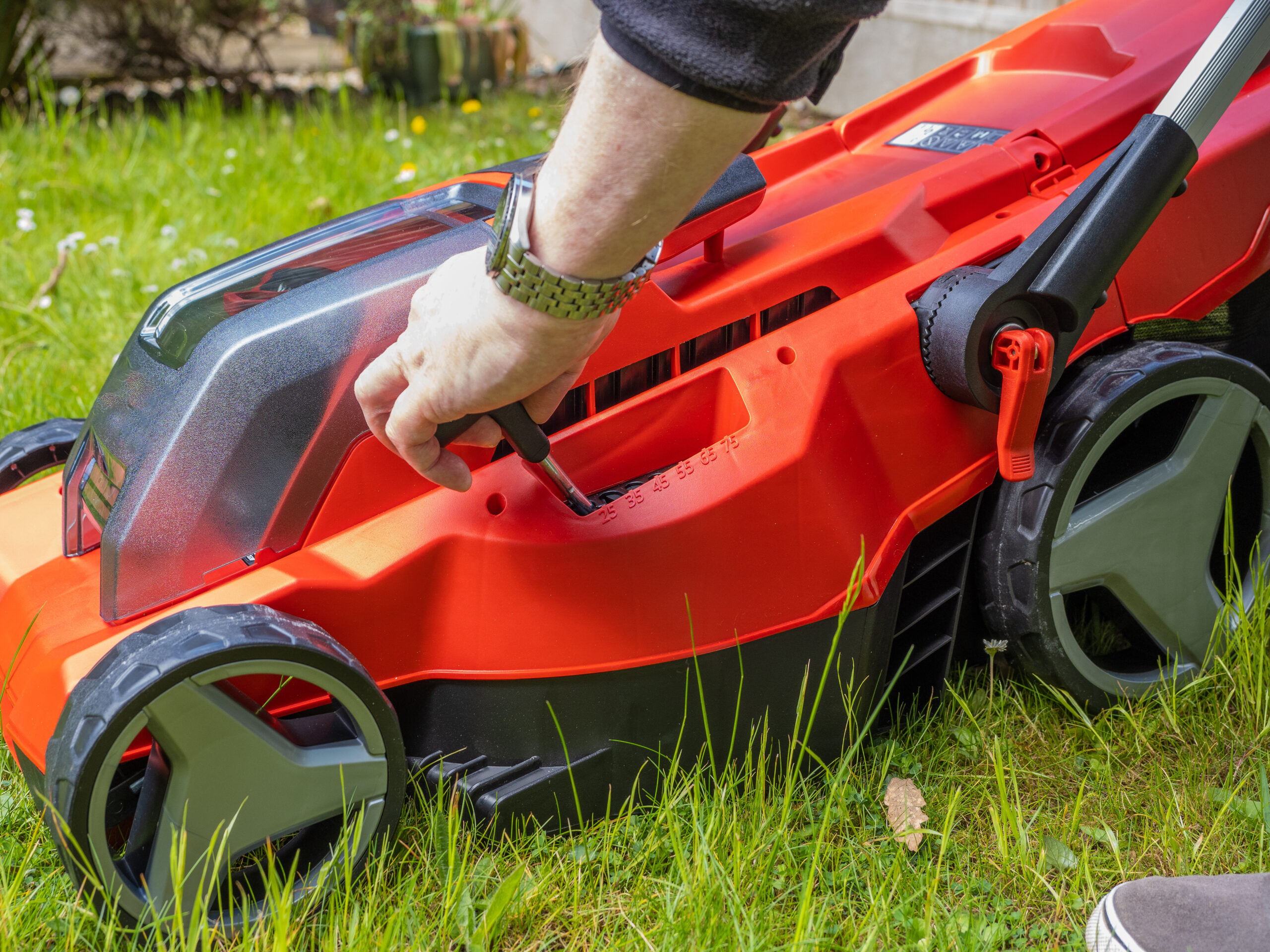
Achieving a thick, dense, weed-free lawn often involves a collaborative effort between the lawn care professional and the homeowner. The lawn care professional will provide the properly timed and right rate-applied fertility – as well as any necessary pest control applications – but it’s usually up to the homeowner to look after a lawn’s mowing and irrigation needs.
If it’s the homeowner’s desire to have a healthy turf stand void of chemical inputs, the lawn care professional can offer expert advice to ensure correct mowing practices are conducted and that irrigation is properly timed, and the right amount of water is applied.
Michigan State University’s Dr. Kevin Frank spoke to an audience of lawn care professionals in March at Nutrite’s 15th annual spring lawn care seminar in Guelph, outlining how cultural practices can help to prevent or control common pest issues.
Anything that be done to promote density is the foremost consideration, he said, “especially on the weed end will really help.”
Key cultural practices include mowing, cultivation, fertilization and irrigation.
“Mowing is the most basic and, you could probably argue, the most important practice,” Frank said. “It’s also one that a lot of people screw up.”
Mowing high and returning clippings are the means to a dense lawn. Clippings are free nutrients, but Frank said many homeowners don’t want them remaining on their lawns. Clippings contain about four per cent nitrogen, one-half per cent phosphorus and two per cent potassium.
Mower blades must be sharp. Dull blades contribute to additional stress to the plant and can bog down a mower. Sharpening blades at least twice a year prevents mowers from bogging down and ensures leaf blades aren’t torn or frayed which contributes to poor aesthetics and increased water loss from the turf.
The one-third rule – removing at most only the upper 33 per cent of the turfgrass blade in a single cutting – is what is widely recommended, but it can be difficult to adhere to in the spring, Frank said, adding if the rule is strictly followed, it could mean having to mow every two to three days as turf grows rapidly once it breaks dormancy.
“It’s (the one-third rule) what we strive for to make sure we don’t stress it too much.”
Frank said he’s often asked if the mowing height should be reduced for the final cut in the fall, but he noted grass is “trained” for a particular height. The worst thing to do is to lower a three-inch height to 1½ inches in one swoop, he added. If the mowing height is gradually lowered, it works. The same is true when raising the height.
“Give it a little bit of time to fill in.”
Frank said when reducing a lawn’s height from four inches to 2½ inches, it opens the canopy to allow more light, but the additional light can lead to more crabgrass. Taller turf – especially with greater density – equals fewer weeds.
Crabgrass control
Home lawns are typically mowed between three and 3½ inches, but many homeowners desire fairway-like turf, Frank said, adding mowing low leads to increased crabgrass populations.
“The seed’s always there,” he said. “It’s waiting for an opportunity.”
By increasing a lawn’s height and adding nitrogen, it significantly reduces the chances of crabgrass invasion.
“If you don’t have access to herbicides, promote density.”
Frank said studies show turf mowed at four inches with three pounds of nitrogen applied yearly and without herbicides resulted in a 75 per cent reduction in broadleaf weed populations when compared to shorter mowing heights with no nitrogen applied.
Use of a slow-release fertilizer will ensure steady turf growth and prevent increased mowing frequency that would result from a quick-release source.
Cultivation helps to loosen soils but can be challenging in the spring when soils are wet, Frank said. Fall cultivation is more ideal, especially with a higher cut of turf.
Some lawn care customers have in-ground irrigation systems while others don’t. Some customers aren’t as concerned as others if their lawn browns up a little in times of drought.
Lawn care customers desiring a dense, green lawn must consider certain factors before turning on their water, including soil type, turf species and amount of sunlight.
Frank suggested irrigation should be done closer to daylight to avoid wet conditions that would be prolonged. More consistent moisture getting to the root system will help the plant get through injury better.
Lawn irrigation tends to be a “socio-economic, suburban, subdivision-type thing,” he said. For some homeowners, irrigation is everything while others are content to wait for rain.
Michigan State University (MSU) research has suggested daily applications of water of about one-tenth of an inch can help reduce the damages from necrotic ring spot and from European chafer grubs. The survival of European chafer grubs was reduced by about 60 per cent when irrigation took place daily in July.
A research project at MSU found that applying one-tenth of an inch of water daily at about 1 p.m. helped to cool the turf and provide sufficient water to get the plant through the day. Some municipalities enforce watering restrictions during critical times of the season which might limit irrigation to once every second or third day. In such a case, a higher amount of water – about one-quarter of an inch – can be applied in the early morning.