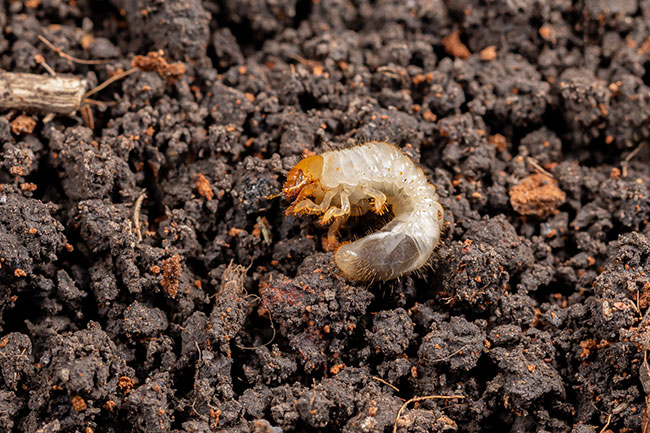
Homeowners can face several setbacks to their lawns, including competition with dandelions, crabgrass and other weeds, not to mention the effects of drought. But, arguably, the most devastating impairment is the presence of white grubs which can result in sections of lawns torn to shreds by nocturnal animals seeking out and dining on the root-feeding insects.
The Ontario cosmetic pesticide ban outlawed several pest control products when it was enacted more than 15 years ago, and many lawn care professionals have since turned to biocontrol methods to win the war against grubs.
Dr. Katerina Jordan of the University of Guelph’s department of plant agriculture has recently been studying soil microorganisms. She told lawn care professionals in March at Nutrite’s 15th annual lawn care seminar day in Guelph how they can make the most out of microbes to control pest insects.
There are both active and passive strategies for biocontrol of pest insects. In an active approach, organisms are added to the site to antagonize the pest.
“It almost acts as a biopesticide,” she said.
A passive strategy involves dealing with what’s already at a site. It’s doing things that neither conserve nor enhance already-existing microbial populations at a site, Jordan said.
When adopting active strategies, it’s good to look at the different mechanisms available, she said, adding the approach is related primarily to insects and weeds because diseases aren’t a significant issue on home lawns.
Pest insects can be targeted by predator insects which feed on their quarry from the outside in. They are often the same size or larger than the target pest and can consume their prey in a short period of time.
Ladybug adults, for example, can ingest 50 aphids a day while ladybug larvae can ingest 200 to 300 per day. They aren’t particularly host specific.
Parasitoids
Parasitoids, or parasitic insects, feed on their prey from the inside out. Their eggs are laid either in or on the target pest where they’ll hatch, and their larvae will feed on the insect. They are generally smaller than the target insect and are relatively host specific.
The parasitoid will kill just one specific pest. Once eggs have hatched, the larvae will move on to other target pests.
Jordan said this type of parasitoid isn’t something that would necessarily be applied, noting there are regulations involved with this biological control method.
The most common biocontrol methods are pathogens that work in a similar fashion to those which cause plant diseases. These include fungi, bacteria and nematodes that cause disease in insects. They can be developed and sold commercially, but often have a short shelf life.
Entomopathogenic nematodes are microscopic worm-like animals which differ from harmful nematodes. They have different mouth parts they use to attack insect larvae. They enter an insect through such orifices as the mouth, anus and breathing openings and have a symbiotic bacterium inside them.
“Once they enter the insect, they release a bacterium that is toxic to the insect and liquifies the cells that then creates a food source for the nematodes and bacteria alike,” Jordan said.
There are multiple species of entomopathogenic nematodes available which will kill its target pest within 24 hours and can potentially persist within the soil.
Jordan said there are new pests never seen before in Canada that have arrived in the country in recent years, such as the bluegrass billbug which is a damaging pest that has few control options.
Specific conditions must be in place for entomopathogenic nematodes to provide effective control. Jordan said lawns must be irrigated before and after applying the nematodes. The microbes are naturally aquatic and require a certain level of moisture. They can also be expensive.
“Not only is it the cost of the nematodes themselves, it’s also potentially the cost of the water to ensure that it works.”
To work effectively, nematodes must be applied when air temperatures range between 10 and 28 degrees Celsius and when the soil temperature is at least 10 degrees.
“You also want cloudy conditions,” Jordan said. “These nematodes are UV-sensitive, and you also need to water them in right away, not only to make sure they stay moist but because they don’t handle the UV well.”
It’s often recommended they be applied at dusk which can be a challenge for lawn care professionals who tend to several lawns in a day and must schedule their applications at optimal times.
The timing of applications is critical to ensure the target pests are present, enabling the nematodes to survive. Target insects tend to be most vulnerable in their earliest stages of development.
Jordan warned there are pros and cons associated with entomopathogenic nematodes. They are approved for use in Ontario and have proven to be effective. They will also persist and reproduce in the soil as long as it remains moist.
On the downside, they are sensitive to ultra-violet light which makes the timing of application tricky. They require a high amount of water and are sensitive to temperature extremes and are also costly and have a shelf life of only about six weeks.
Naturally occurring fungus
Another biocontrol method Jordan noted is Beauveria bassiana which is a naturally occurring fungus that is effective against both hairy chinch bug nymphs and adults. Because it originates from Canada, it’s not invasive and has evolved within the northern climate.
The fungus meets the insect, releasing enzymes and producing spores that germinate and penetrate the insect. Once inside the insect, the fungus produces toxic chemicals that kill the target pest.
Beauveria bassiana also has its pros and cons. It’s been able to achieve upwards of a 60 per cent reduction in chinch bug populations and can be persistent in the soil under ideal conditions if the soil is kept moist, especially after being applied.
A key negative aspect is that if the fungus is around long enough, it can potentially kill beneficial organisms. It is sensitive to UV light and can take up to 14 days before the effects in pest populations are seen.
Endophyte grasses
Endophytically enhanced turfgrasses have helped deter pest insects. An endophyte is an endosymbiont, such as a bacterium or fungus, which lives within the plant yet doesn’t cause apparent disease. They are a non-pathogenic fungi that have a symbiotic relationship with certain species of turfgrass, including tall fescue and perennial ryegrass. They are host-specific and seed-transmitted.
“They release a toxin that will deter feeding by insects,” Jordan said.
The advantage of endophytic grasses is that they’re easy to obtain and will deter insect feeding with what appears to be no negative impact on the grass.