The automotive industry has invested significant funds into research and development in the electric vehicle space. With more than 35,000 charging stations installed in North America, Tesla has shown the automotive industry and EV owners that the chicken versus egg paradigm does not have to hold true (there are more than 300,000 charging stations in North America).
Pipistrel (part of Textron eAviation) and Diamond Aircraft both have electric aircraft tailored to general aviation and Flight Training Units. Pipistrel’s first electric aircraft was the Alpha Electro which has been discontinued and replaced with the Velis Electro. The Velis Electro has been certified in Europe by EASA and Textron is awaiting final certification by the FAA and Transport Canada. [In late 2025, following the publishing of this article, the Pipistrel Velis Electro and its related training aircraft earned validated type certificates from Transport Canada. The milestone follows a regulatory update in July 2025 that permitted electric aircraft to be used for pilot training in Canada.] The FAA granted the Pipistrel Velis Electro an airworthiness exemption in March 2024, allowing it to be flown as a light-sport aircraft (LSA) in the U.S.
This exemption paved the way for U.S.-based flight schools to use the electric aircraft in their training programs. In 2024, TC issued a Special Certificate of Approval (SCofA), with many conditions attached. However, on May 31, 2024, TC issued an “Order Respecting the Use of Pipistrel SW 121 and SW 128 for flight training exempting the Sealand Flight Ltd. from section 406.32(a) of the Canadian Aviation Regulations”. Justin Labelle, Chief Operating Officer of the Waterloo Wellington Flight Centre, reports: “In September 2025, WWFC received a CofR for the purpose of commercial operations for one of the Pipistrel Velis Electro, allowing the WWFC to begin revenue generating flights with the aircraft. Over the next few years, we will be gathering real-world data on the true utilization and costs of these electric aircraft.”
On the surface, the economics of electric aircraft sounds compelling as does electric car economics. My electric car uses approximately $420 worth of electricity for 13,500 miles driven, as well as avoiding other costs including oil changes and brake wear-tear. The cost of electricity to fully charge the Electro Velis is approximately US$3.00 (costs will vary based upon your geography) and takes one and half hours (depending upon a variety factors). The fuel component of a one-hour flight in a Cessna 172, would equate to US$52.00 (based upon an U.S. national average of US$6.50 for 100LL).
AVGas fuel, however, can be as high as US$8.60 per gallon, depending upon the specifics of your airport.
Cost of electricity is just one component of the Total Cost of Flight Time (TCFT). In the case of the Pipistrel EVs both EASA and Transport Canada provide guidance on routine maintenance. In Canada, in leu of a wealth of aircraft operational data, TC has taken a very conservative approach to maintenance. The problem with the Canadian environment is that it is a bit of chicken versus the egg scenario. TC requires more flight data before it will relax its maintenance intervals and are relying on maintenance recommendations from Pipistrel.
For Canadian flight schools with the Pipistrel Velis Electro, TC’s Special CofA mandates the following: batteries replaced every 500 hours (a battery pack is comprised of two battery modules); electric engine replaced at 2,000 hours; engine cooling system pump replaced every 2,000 hours or five years (whichever comes first); propeller and propeller attachments replaced every 900 hours; charging port assembly replaced every 500 hours; battery cooling pumps and coolant (two) replaced every 2,000 hours or five years (WECF); engine coolant pump replaced every 2,000 hours or five years (WECF); brake rubber seals replaced every 3,000 hours or five years (WECF); hydraulic brake fluid replaced every five years; nose landing gear shock absorber replaced every 2,000 hours; parking brake valve lever replaced every five years; rubber coolant hoses replaced every five years; electrical junction box replaced every 6,000 hours; and the Velis Electro has a 10-year life limitation. The Total Cost of Flight Hour (excluding an instructor) could be as high as $326 per hour. Flight schools would then add margin to this cost.
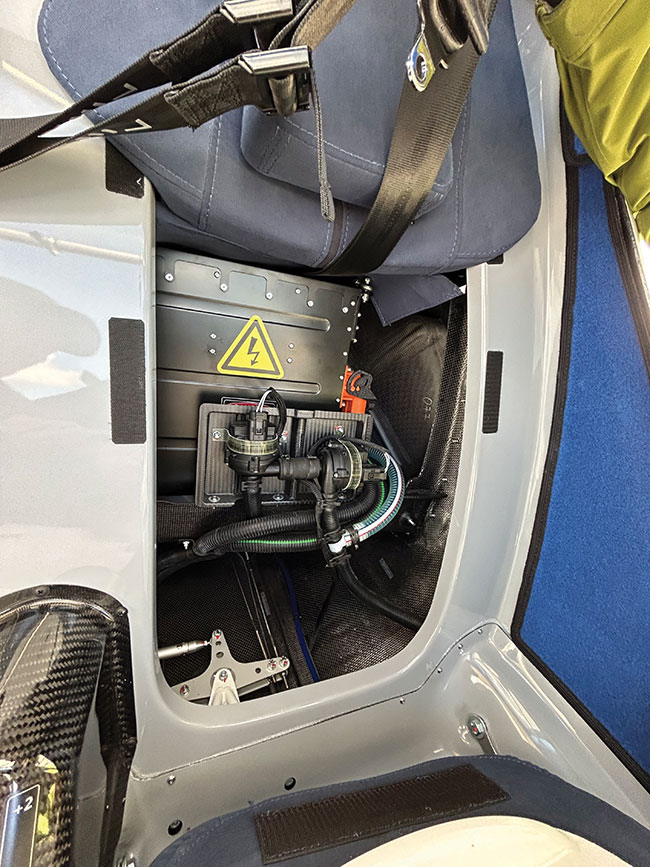
Pipistrel feels that its current generation batteries (Generation 2) should be able to achieve more than 1,000 hours of usage. Some of the flight schools interviewed for this article, however, are reporting significantly less than 500 hours. The current cost for a battery pack is EURO25,000 (US$29,050) plus shipping and applicable taxes (again, the battery pack is comprised of two battery modules). With the excessive costs of batteries, maximizing battery cycles and longevity is critical to TCFT. New Vision Aviation, a flight school in Fresno, California, acquired four Pipistrel’s second-generation electric aircraft, the Alpha Electro. The aircraft sat for two years awaiting FAA approval, which was received in 2024. With the FAA type certification in hand, New Vision Aviation found that the batteries needed to be replaced due to inactivity. While the aircraft was outside of Pipistrel’s two-year warranty, Pipistrel provided the batteries to them without cost, other than shipping.
As the batteries are classified as hazardous materials and the flight school could not wait two months for the batteries to be shipped by sea in a container, the shipping costs incurred were US$15,000. New Vision Aviation found, that in California, the daytime temperatures caused the chargers to exceed their operational temperature requirements. A one-hour charge took overnight to be accomplished. Pipistrel has since changed the design of its chargers. At temperatures above 40C, the batteries could be damaged through either sitting in the hangar or charging. Unlike electric cars, the Alpha Electro battery is air cooled with no liquid cooling system to automatically turn on (when the aircraft is not in flight) to protect the batteries.
E-Flight Academy of the Netherlands has a fleet of Pipistrel Velis Electro, with five aircraft completing more than 4,000 hours in the last four years. Its oldest Velis Electro has roughly 1,300 hours. Evert-Jan Feld, co-founder and head of training at E-Flight Academy, reports that Pipistrel’s second-generation batteries are seeing roughly 230 hours before the “state of health” drops to below 50 per cent (a point where there is not sufficient flight time for a student pilot and instructor to complete a training flight). Pipistrel claims that the second-generation batteries should see more than 1,000 hours of usage before replacement.
E-Flight Academy found that the first-generation batteries were delivering 250 hours before they required replacement. The Pipistrel aircraft systems are constantly monitoring and recording data, used to calculate a number representing the batteries’ state of heath. This parameter is used to determine when the battery pack should be replaced. E-Flight Academy replaced its batteries under Pipistrel’s battery exchange program. The cost to E-Flight Academy was EURO28,000 (US$32,500), including shipping but excluding labour and taxes. Everet-Jan Feld has calculated that the battery deprecation adds EURO52 (US$60) per hour. E-Flight Academy has also found that the cost of maintenance, plus the usual operating costs (insurance, hangarage, etc.), makes the business case for the use of the Pipistrel electric aircraft marginal.
Based upon the maintenance requirements set out by TC, and including other operating costs, such as insurance, training, cost of capital (the aircraft is fully written off in 10 years), the TCFT per hourly jumps from $3 for electricity to $317 (US$229) per hour. These same flight schools rent out their Cessna 172s at $230 per hour. In the case of E-Flight Academy, it rents the Velis Electro at EURO160 (US$184) for 40 minutes, with a margin of roughly five per cent. While they would like to charge more per hour for the rental, the market competition is holding them at this rate. Sadly, the founders of the flight school have yet to draw a salary. To make ends meet, Feld has another job (he is a commercial flight instructor and helicopter pilot).
“While we were early adopters of electric aircraft in a flight training unit, we did receive a government subsidy to pay for the charging environment, solar panels and battery storage farm,” Feld says. “But there were no subsidies for the acquisition and operating costs of the electric aircraft. From an economic and business perspective, the current costs are not sustainable.” Its next challenge in determining long-term profitability is the cost of parts. Pipistrel has been providing quotes when new replacement parts are required, but will not provide the owners with the costs of components, such as the engines, pumps and other major components. This makes it challenging for a flight school operator to create a realistic economic model. Pipistrel has published a spreadsheet with operating costs and maintenance hours. There is very little detail in terms of the cost of individual components and the hours do not reflect real-world experience.
The economic challenge is the lack of data for the manufactures and regulators to determine when the electric engine system should be replaced or overhauled. Further, battery packs (which consist of many battery modules made from many battery cells) are being replaced rather than repaired. A few faulty battery cells can cause an entire battery pack to fall below the minimum capacity required for the aircraft.
Pipistrel reports: “Battery maintenance has also seen significant improvements. Initially, battery maintenance required swapping out aged batteries for brand-new ones. Regulations are evolving, however, and, outside of the EU, Pipistrel is already offering overhaul services where only the battery cells are refurbished. The battery management system, cooling and battery enclosure remain unchanged, significantly reducing the battery’s impact on operating costs.” The cost of the battery packs and shipping increase the TCFT. Operational issues with the airframes (45-minute flight time, useful load and environmental issues) causes the annual flight time for a flight school to be reduced. Most of the flight schools interviewed were projecting annual flight times of 250 hours. Many of the aircraft’s parts have a five-year replacement interval (or 1,250 hours), which causes the cost per hour to be increased.
Electric cars have matured over the past decade, but battery technology innovation has yet to deliver commercially available battery cells which increase the power-to-weight ratio, reduce the charging times, and increase the number of charging cycles. Like most things in our technology driven society, however, only time and R&D investments will be required to deliver a new battery paradigm. Once the regulators have more data in hand, maintenance intervals should be relaxed, improving the Total Cost of Flight Time, which, as 100LL faces more headwinds, will be priceless. | W